
Home ≫ PCB Assembly ≫ SMT / THT Assembly
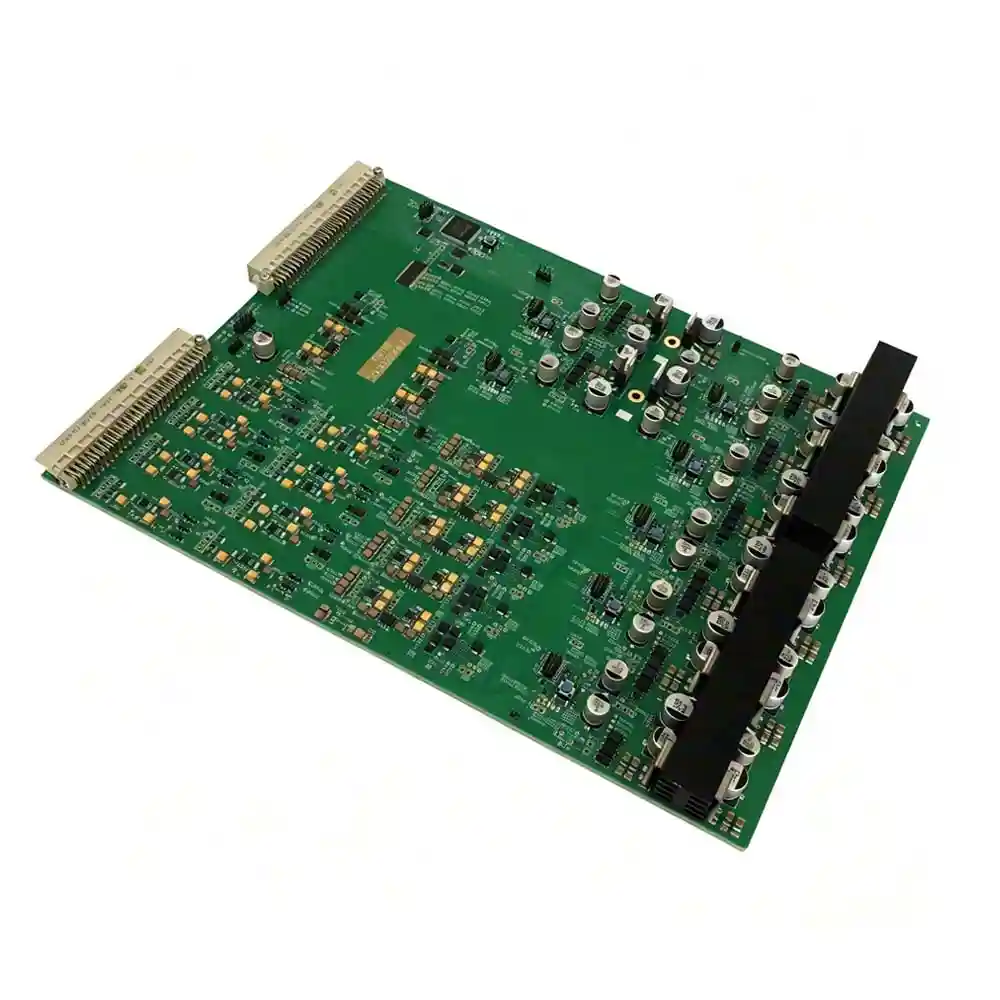
SMT and THT PCB Assembly – Mixed‑Technology Surface Mount & Through‑Hole Solutions
We provide SMT and THT PCB assembly — also called mixed‑technology PCBA or hybrid surface mount/through‑hole assembly.
For applications ranging from fine‑pitch component placement (down to 0201 and 01005) to high‑reliability connector soldering and power terminals.
Whether you need pure Surface Mount Technology (SMT), pure Through‑Hole Technology (THT), or a combination of both on a single board, we handle the full process mix.
Table of Contents
What is the difference between SMT and THT assembly?
Surface Mount Technology (SMT) places components directly onto the board surface using reflow soldering, enabling higher-density and smaller components.
Through-Hole Technology (THT) inserts component leads through drilled holes and solders them in place, and is typically used for connectors and components that need higher mechanical strength. This board edge connector will be plugged and unplugged repeatedly; for instance, it usually needs the mechanical hold that through-hole soldering provides.
For boards that require both — and most with edge connectors or power terminals do — we run mixed‑technology SMT/THT assembly, combining reflow and wave/selective soldering in a single workflow.
Many boards use a mixed-technology approach that combines both on the same assembly, placing fine-pitch parts with reflow and reserving through-hole for the connectors and components that need it.
Why Manufacturers Choose Us for This Work?
- Fine-pitch placement down to 01005/0201 chip components
- Reflow, wave, and selective soldering all available in-house- mixed-technology builds
- SMT and THT on the same board — as a standard capability, not a special case
- AOI, X-ray, and solder paste inspection (SPI) built into the process
Service Parameters
Our SMT and THT PCB assembly services are built around the following core capabilities:
| Parameter | Details |
| Supported component types | Supported component types: 01005/0201 micro‑SMT, BGA, QFN, fine‑pitch surface mount, and through‑hole connectors and terminals |
| Soldering processes | Reflow, wave, and selective soldering |
| Mixed-technology support | SMT and THT combined on the same board |
| Inspection methods | AOI, X-ray, solder paste inspection (SPI) |
| Typical fit | Consumer-density boards through high-reliability connector assemblies |
Applications by Industry
| Industry | Typical requirement | Industry page |
| Automotive | Mixed-technology ECU assembly | Automotive PCB manufacturing |
| Medical | Fine-pitch placement for wearable sensors | Medical device PCB applications |
| Aerospace | High-reliability through-hole connector assembly | Aerospace PCB manufacturing |
| Power & Energy | Placement accuracy for BGA/QFN packages | Power & Energy PCB manufacturing |
| Industrial | Mixed SMT/THT builds for control boards | Industrial PCB manufacturing |
Our SMT and THT Assembly Process
1. Solder Paste Printing & Inspection
Stencil design and paste deposition, checked before placement begins. See PCB Assembly Stencil Design and Solder Paste Printing.
2. SMT Component Placement
Including tight-tolerance BGA and QFN placement. See SMT Assembly BGA and QFN Placement Accuracy.
3. Reflow Soldering
Controlled thermal profile to form reliable surface-mount joints. See SMT Assembly Reflow Soldering Process Explained.
4. THT Insertion & Wave/Selective Soldering
Through-hole components are inserted and soldered via wave or selective process depending on the board. See THT Assembly Wave Soldering Process Explained.
5. Solder Paste Inspection (SPI)
Verifying paste volume and placement before reflow to catch defects early. See SMT Assembly Solder Paste Inspection Process.
6. Final Inspection
AOI and, where specified, X-ray inspection to confirm the finished board meets spec.
Process Capabilities
Fine-pitch component placement
- Down to 01005 and 0201 chip components, where placement accuracy is the whole ballgame.
Mixed-technology builds
- SMT and THT combined on a single board, common in applications like automotive control units and industrial equipment.
High-reliability connector assembly
- Through-hole soldering for connectors and components where mechanical strength matters as much as the electrical connection. See THT Assembly for High-Reliability Connectors and THT Assembly for Power Connectors and Terminals.
Placement speed and accuracy
- Throughput and tolerance both matter at volume; see SMT Assembly Component Placement Speed and Accuracy and, for placement-registration detail, Fiducial Marks in PCB Assembly: Why They Matter for SMT Placement.
Panelization & soldering process detail
- See PCB Assembly Panelization for SMT Production, PCB Assembly Nitrogen Reflow Soldering Benefits, and PCB Assembly Selective Soldering Process
SMT vs THT vs Mixed-Technology Assembly
| Technology | Advantage | Typical application |
| SMT | High density, smaller components | Consumer electronics, fine-pitch parts |
| THT | Higher mechanical strength | Connectors, high-power components |
| Mixed | Combines both on one board | Automotive ECUs, industrial control boards |
Choose SMT where density and component size are the priority; choose THT where a connection needs to survive repeated mechanical stress.
Expect mixed-technology construction whenever a design genuinely needs both —which is most of the time on anything with an edge connector or power terminal alongside fine-pitch logic.
For process-level detail on each, see SMT PCB Assembly Process Explained, THT PCB Assembly Process Explained, and Mixed SMT and THT PCB Assembly Process.
Certifications & Quality
Every board we assemble — SMT, THT, or mixed — runs through the same quality system. See our certifications page for current ISO 9001, UL, and IATF 16949 (automotive) certificates.
What you want to ask
Frequently Asked Questions
Q: What is the difference between SMT and THT assembly?
A: SMT places components directly onto the board surface using reflow soldering, which supports higher density and smaller components. THT inserts component leads through drilled holes and solders them for higher mechanical strength, typically used for connectors and power components.
Q: Can you handle mixed SMT and THT assembly on the same board?A PCB suitable for flight control systems?
A: Yes — mixed-technology builds are a standard part of our process, not a special case. This is common in applications like automotive ECUs and industrial control boards. See Mixed Technology Assembly for Automotive ECUs and Mixed SMT/THT Assembly for Industrial Control Boards.
Q: What is the smallest component size you can place for SMT assembly?
A: We support fine-pitch placement down to 01005 and 0201 chip components. See SMT Assembly for 01005 and 0201 Chip Components for what that level of placement accuracy involves.
Q: What inspection methods do you use for SMT/THT assembly quality control?
A: We use AOI (automated optical inspection), X-ray inspection for hidden joints like BGA packages, and solder paste inspection (SPI) ahead of reflow to catch defects before they become finished-board problems.
Further Reading
- SMT Assembly for High-Density Fine-Pitch Components
- SMT Assembly for Medical Wearable Sensors
Contact us
Ready to get a quote?
Send us your BOM and board files, and we’ll confirm the right process mix for your build.